 Chapter 1 of 3
How Bats Navigate in the Dark
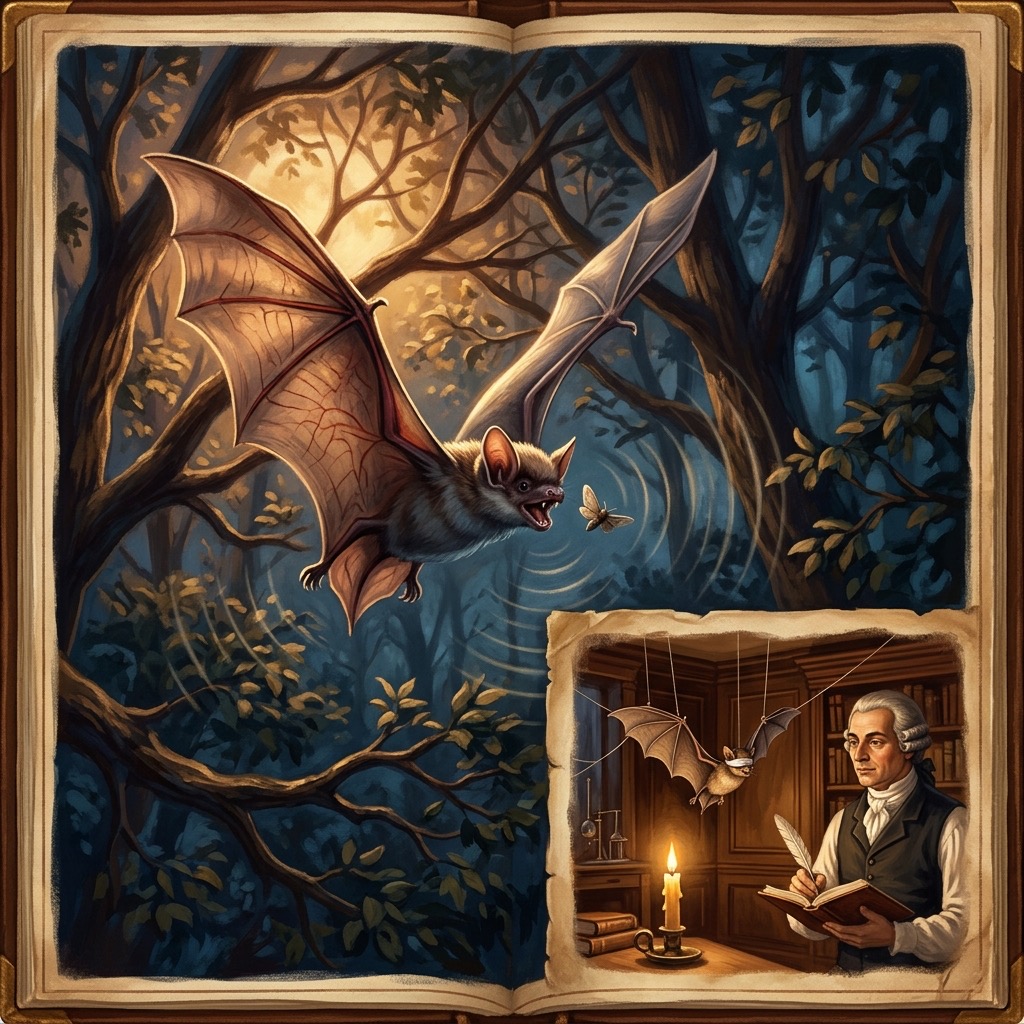
Bats race through pitch-dark forests, snatching insects out of the air without clipping a single twig. For centuries, people assumed they simply had night vision. In 1793, the Italian scientist Lazzaro Spallanzani put that idea to the test. He covered bats' eyes and released them in a dark room strung with thin threads. They flew around perfectly. A year later, the Swiss surgeon Louis Jurine plugged bats' ears instead, and now they crashed into everything. Bats were by hearing. But no one could hear any sound coming from them, so the result seemed impossible, and many scientists it. The answer had to wait until 1938, when an American student named Donald Griffin brought bats near a new kind of microphone that could pick up very high-pitched sounds. It crackled with their calls. The bats had been shouting all along, just above the range of human hearing. Griffin later named the ability . The story holds a lesson of its own: the old experiments were right, but the tool needed to explain them hadn't been invented yet. Sometimes the arrives long before the explanation.
Think
Spallanzani and Jurine proved that bats need their ears but couldn't explain why. Were they right to share a result they couldn't explain?
Try it
In a quiet room, close your eyes, click your tongue, and slowly bring a large book toward your face, or walk slowly toward a wall. Many people can hear the echo change as they get close. Some blind people use exactly this skill to find their way.