 Chapter 1 of 3
How Bluetooth Connects Wirelessly
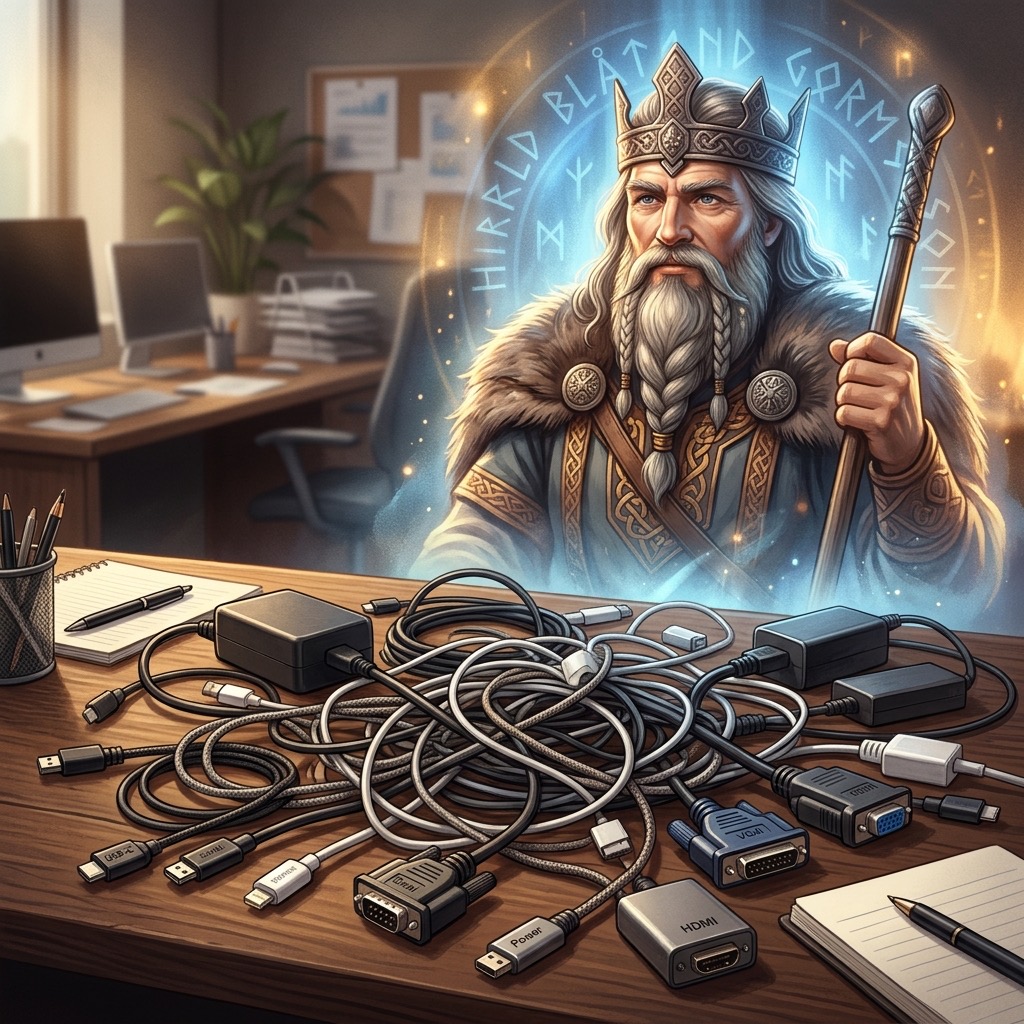
In the early 1990s, connecting gadgets meant cables: a different plug for every phone, mouse and headset. In 1994, engineers at the Swedish company Ericsson set out to replace them with a cheap, low-power radio link that any device could use. The idea was named after a 10th-century Danish king, Harald "Bluetooth" Gormsson, famous for uniting tribes, just as the new technology would unite gadgets. Its logo even combines the old Viking runes for his initials, H and B. The most important part wasn't the radio but the agreement. Bluetooth is a : a shared rulebook, called a , that every promises to follow. It spells out how devices say hello, how they send data, and how they say goodbye. Because a Sony headset and a Samsung phone follow the same , they can talk without ever having met. Bluetooth carries data on radio waves, the same kind of invisible wave as Wi-Fi, only much weaker. Your earbuds with just a few thousandths of a watt. That's why Bluetooth reaches across a room rather than across a town, and why a battery smaller than a pea can last for hours.
Think
Why would competing companies like Apple and Samsung agree to follow the same rulebook instead of each making their own?
Try it
Play music to your earbuds or speaker and slowly walk away from your phone. Note where it starts to stutter. Then try again with a wall, or your own body, between them. Radio fades with distance and is soaked up by water, and you are mostly water.