 Chapter 1 of 3
How 100,000-Ton Ships Float
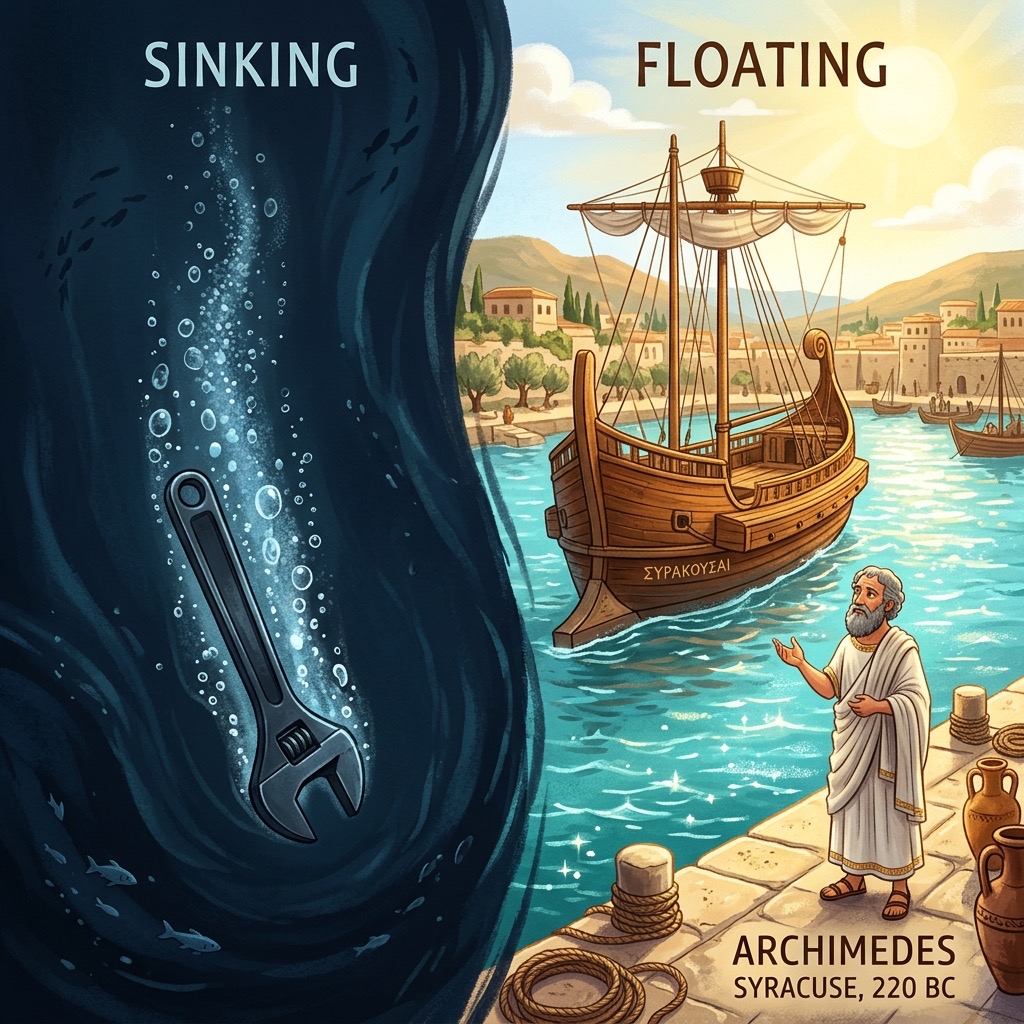
Drop a steel spanner into a bucket and it sinks at once. Steel is nearly eight times than water: a cube of steel weighs eight times as much as the same cube of water. Yet an aircraft carrier made of 100,000 tons of steel floats across the ocean. How can both be true? This apparent has a beautifully simple answer. It goes back to the Greek thinker Archimedes, more than 2,200 years ago. According to , he noticed the water rise as he climbed into his bath. Whether or not the story is true, his discovery is. When an object sits in water, it pushes some water out of the way. This is called . And the water pushes back up on the object with a force equal to the weight of the water it moved aside. So floating is a contest. On one side, the object's weight pulls it down. On the other, the force pushes it up, and that push grows the deeper the object sinks, because it displaces more and more water. If an object can push aside its own weight in water before it's completely under, it floats. If it can't, it sinks.
Think
A ball of clay sinks, but the same clay shaped into a bowl floats. Nothing about the clay changed, so what did?
Try it
Roll a lump of modelling clay into a ball and drop it in water: it sinks. Now press the same lump into a thin, wide boat. Add coins one at a time and count how many it carries before it goes under.