 Chapter 1 of 3
How Touchscreens Sense Your Finger
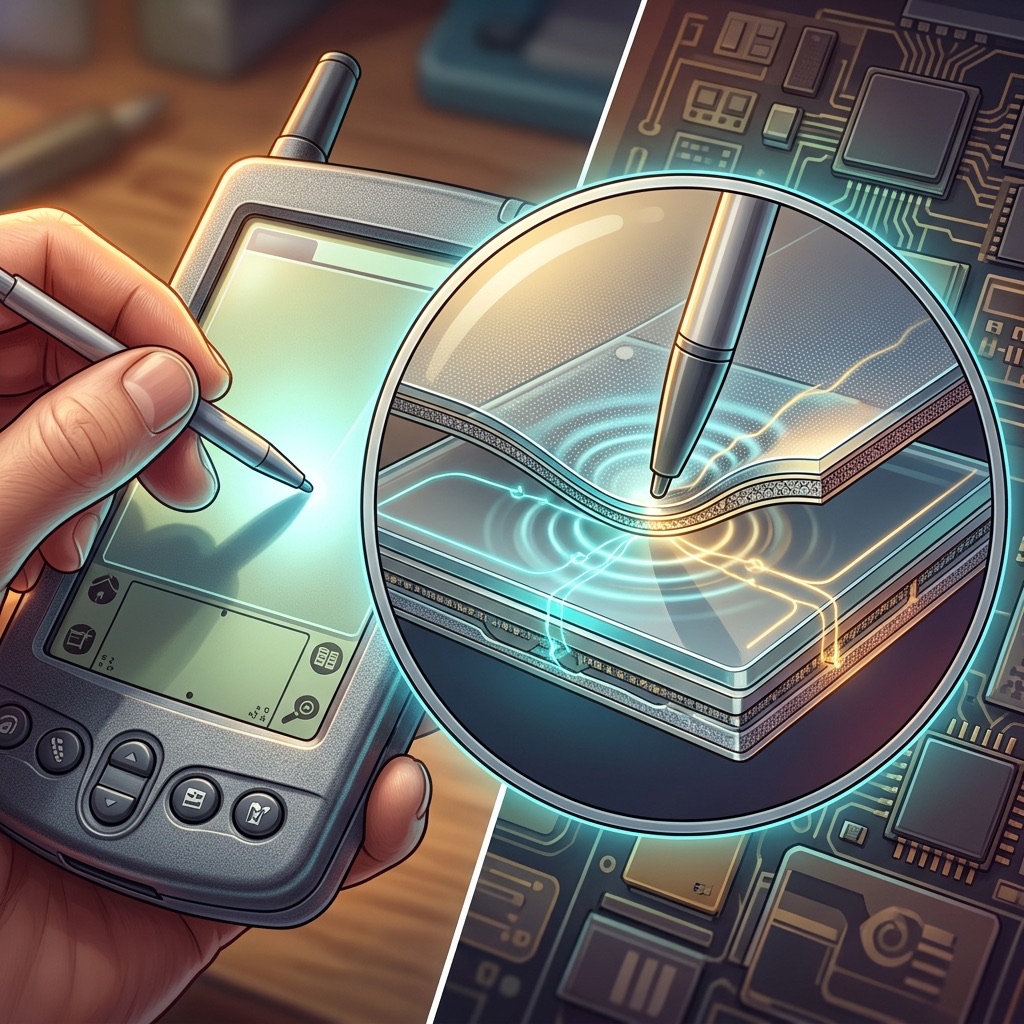
Early touchscreens, on cash machines, ticket machines and old handheld organisers, were . They were made of two sheets, each coated with a thin layer and held apart by tiny spacer dots. When you pressed hard, the top sheet bent down and touched the bottom one, completing a circuit at that spot. The device worked out where by measuring the at the point of contact. screens worked with anything, a finger, a fingernail or a pen, because all they needed was pressure. But the design had . You had to press firmly, the soft top layer scratched and wore out, and the extra plastic layers made the picture dimmer. Most could only sense one touch at a time, so gestures like pinch-to-zoom were impossible. Smartphones needed something better: a screen of hard, clear glass that responds to the lightest brush of a fingertip and can follow several fingers at once. The answer came from a property of your own body. You conduct electricity.
Think
Resistive screens work with a fingernail, a stylus or a gloved finger. Why might a hospital or a factory still choose one today?
Try it
Find a touchscreen that needs a firm press, like a parking ticket machine or a delivery signature pad, and try it with a fingernail. Then try your phone with a fingernail. Which one responds? Now you know which kind each one is.